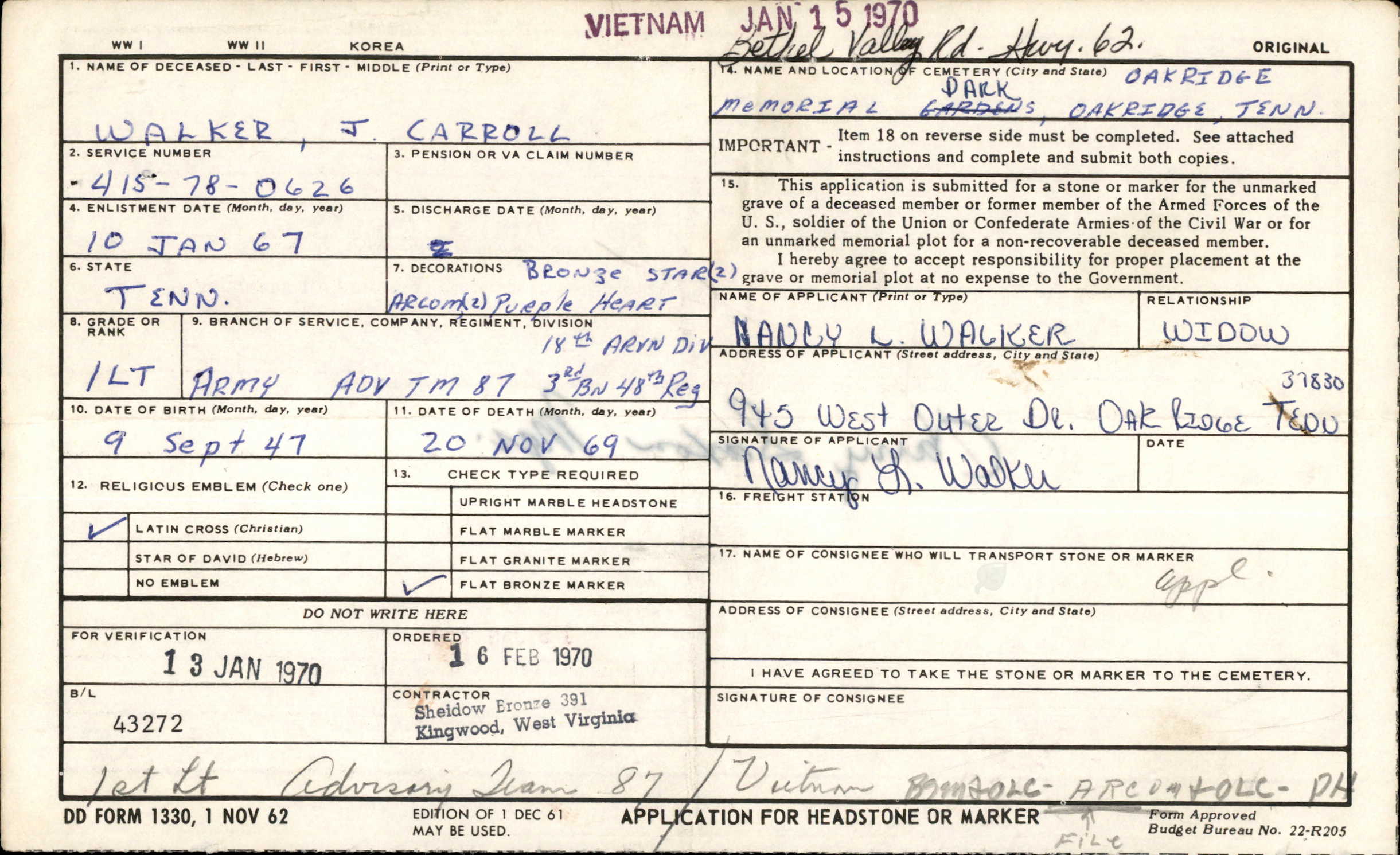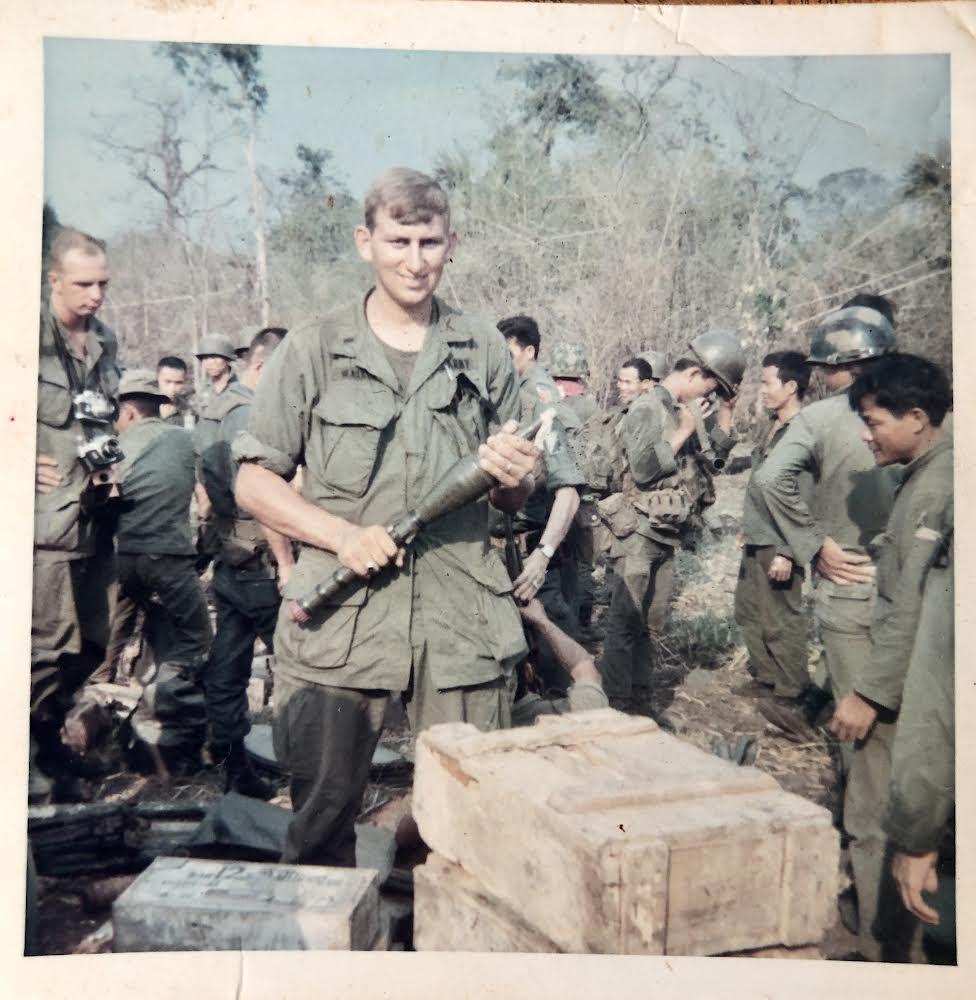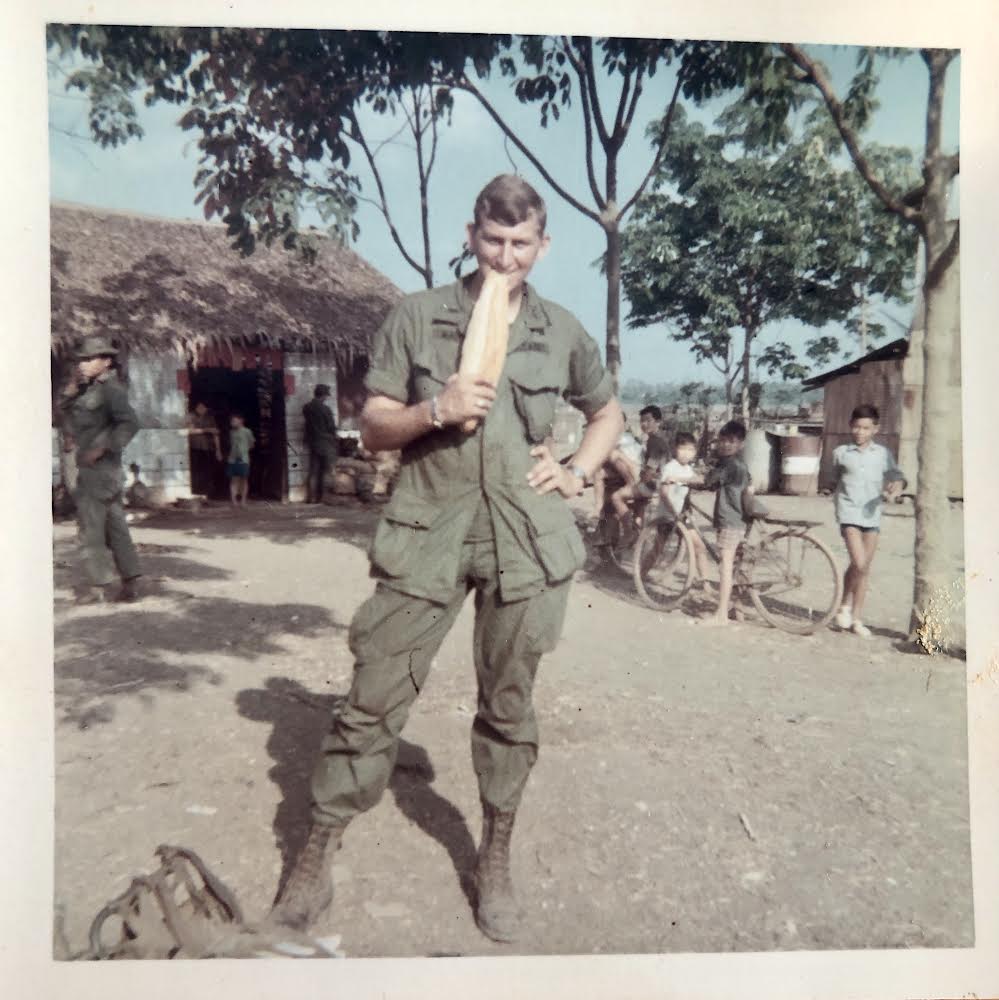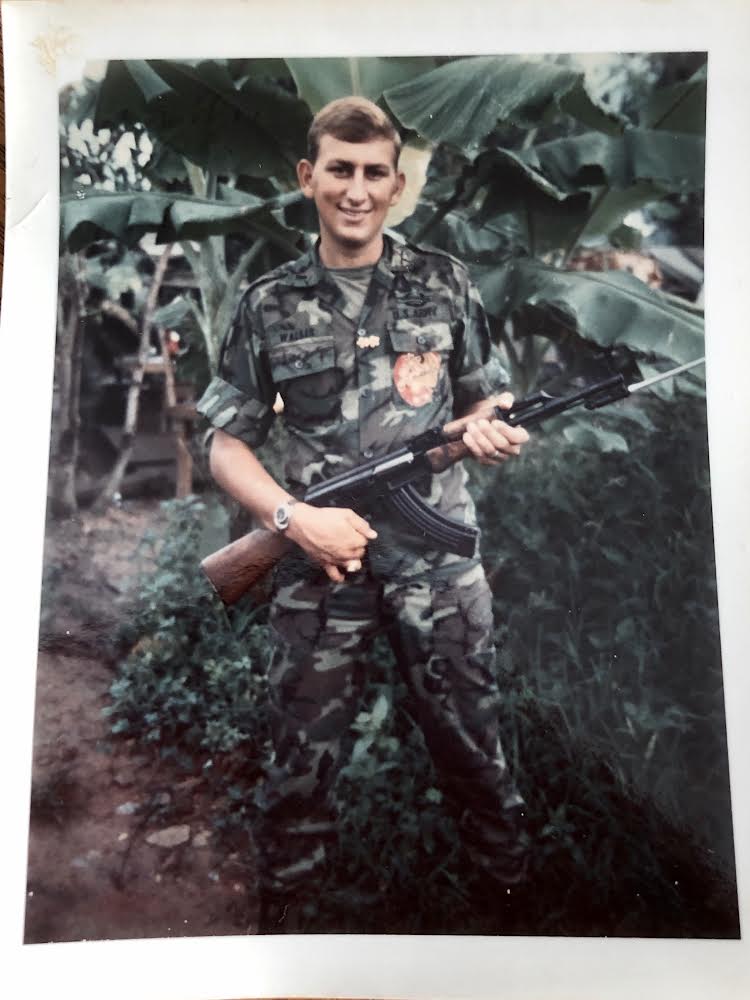
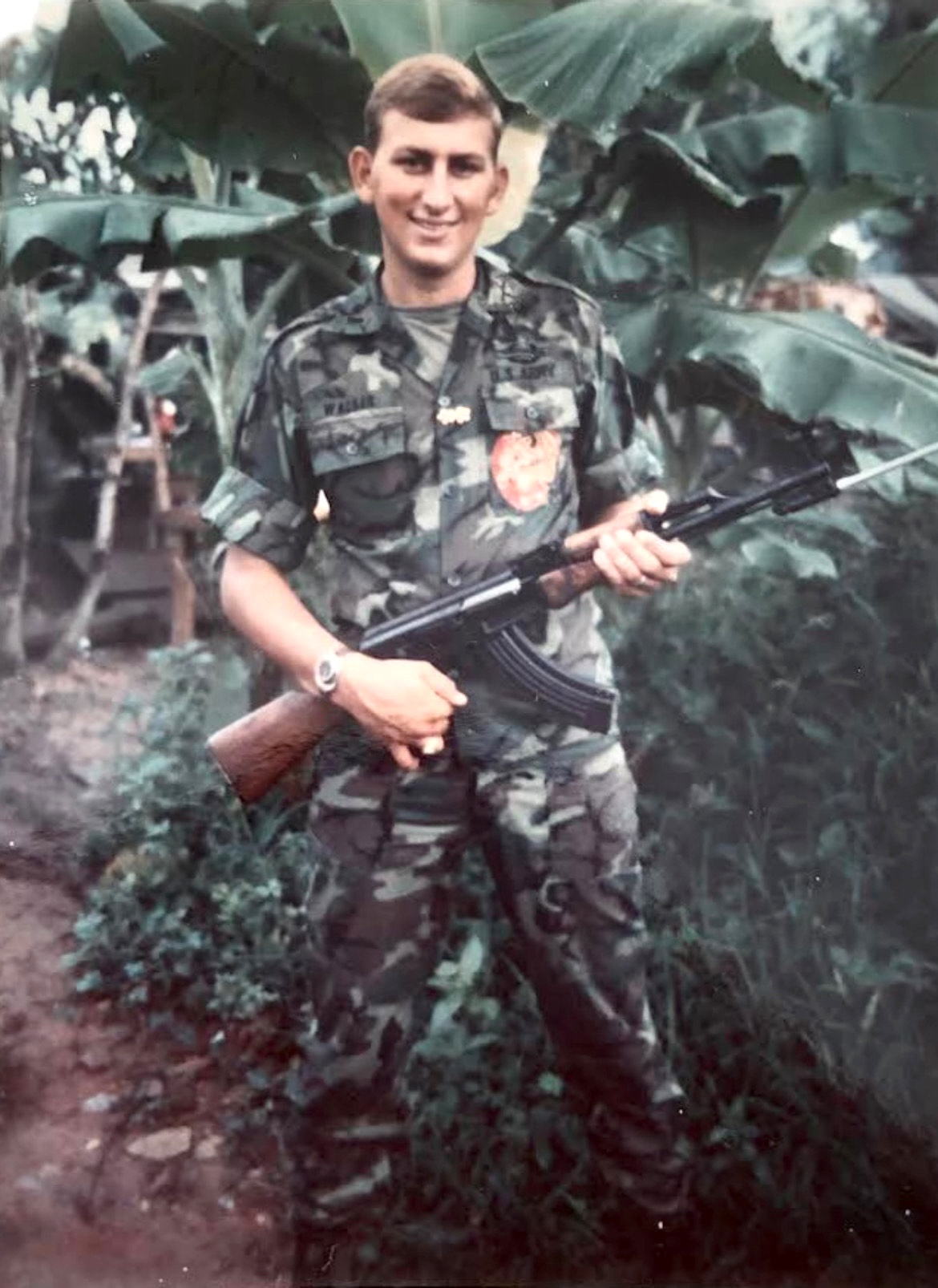
CORRYTON, Tenn. — In less than two years, 1Lt. Jackie C. Walker went from a newly commissioned infantry officer to a frontline combat advisor in Vietnam, serving with the U.S. advisory effort in III Corps before dying in Japan on Nov. 20, 1969, from wounds received in Vietnam. Army condolence correspondence and memorial letters show that Walker was remembered not only as a fallen officer, but as a trusted member of Advisory Team 87 and a soldier respected by the South Vietnamese troops alongside whom he served.
Walker was born to Jack and Lavergn Walker on Sep. 9, 1947, in Greenville, TN. The family would later move to Corryton, TN where Walker graduated from Holston High School. After completing one year at the University of Tennessee – Knoxville, where he majored in Agriculture, Walker volunteered for military service with the U.S. Army. He graduated from Basic Combat Training, at Fort Cambell, on Mar. 17, 1967. Walker’s Army story accelerated quickly. Family records show he was commissioned on Jan. 15, 1968, and the Infantry Officer Candidate School graduation program from that same date lists “Walker, Jackie C.” among the new officers graduating into the Infantry branch, from Fort Benning.
After Fort Benning, the surviving record places Walker at Fort Campbell, Kentucky, with the 5th Battalion, 1st Infantry, where he served in early platoon and company-level leadership roles as a young lieutenant. One certificate in the file shows he completed the Junior Officer Orientation Course at Fort Campbell on Mar. 9, 1968, part of the Army’s effort to prepare newly commissioned officers for line service.
The files then show a more specialized path. Officer records in the family archive indicate that Walker went through the advisor-preparation pipeline used for Vietnam-bound officers: temporary duty for Air Transportation Planning training, the MATA Sector Unit Course at the U.S. Army Special Warfare School at Fort Bragg, and then Vietnamese language instruction at Biggs Field, Fort Bliss. A surviving language certificate shows he completed 240 hours of Vietnamese, Saigon dialect, from Oct. 28 to Dec. 19, 1968. By Jan. 13, 1969, Walker had arrived, as a 2Lt, in the Republic of Vietnam. On Jan. 15, 2969, he was promoted to 1Lt. and assigned as the Assistant Battalion Advisor for the 1st Battalion, 52d Regiment, 18th ARVN (Army of the Republic of Vietnam) Division.
The larger MACV history helps explain what that meant on the ground. In 1969, MACV described the war as a “one war” effort in which combat operations, pacification, and improvement of South Vietnamese forces had to move together. In III Corps, the official mission was to destroy enemy forces infiltrating from Cambodia, protect the vital Saigon–Gia Dinh area, keep land and water lines of communication open, and expand government control outward from the capital. Those same directives, the history notes, were made binding on U.S. advisory personnel. Walker’s work as an assistant battalion advisor was therefore not peripheral to the war; it sat squarely inside MACV’s central strategy for 1969.
The geography of Walker’s war was unforgiving. The MACV history describes III Corps as a zone of rivers, lowlands, border forests and approaches to Saigon, with the 18th ARVN Infantry Division posted east of the capital in Long Khanh and Binh Tuy provinces. The same history explains that III Corps operations were generally treated as part of the broader TOAN THANG campaign rather than as isolated named battles. That matters because Walker’s advisory service with the 18th ARVN Division placed him in a region that was strategically important, heavily contested, and directly tied to the defense of the capital.
It did not take long for Walker to be thrust into combat. A Bronze Star Medal with “V” Device Citation describes the type of military leader Walker had become.
“For heroism in connection with military operations against a hostile force: First Lieutenant Walker distinguished himself by heroic action on 5 February 1969 while serving as Assistant Battalion Advisor 4th Battalion, 52d Regiment, 18th Division, Army of the Republic of Vietnam. On that date as the friendly battalion was conducting a reconnaissance in force operation southeast of Xuan Loe, Republic of Vietnam, contact was made with a well-armed and highly motivated enemy force. The initial contact was brief, and the unit suffered only light casualties. Lieutenant Walker moved through the hastily prepared perimeter to extract the wounded soldiers and return them to the rear aid station for further assistance and evacuation. Shortly thereafter, very heavy fighting erupted which threatened to decimate the allied battalion due to heavy casualties and loss of command and control. Lieutenant Walker reacted immediately to the critical situation and maneuvered throughout the fire-swept area, pointing out targets to friendly gunners and shouting encouragement to the defending troops. He continued to extract casualties and reposition personnel to cover unprotected areas. Consistently exposed to the intense hostile barrage, he fearlessly directed accurate countermeasure fires which materially impeded the enemy advance until reinforcements arrived to secure the area. First Lieutenant Walker’s heroic actions were in keeping with the highest traditions of the United States Army and reflect great credit upon himself and the military service.”
By late 1969, the official history shows, Long Khanh remained active ground. U.S., ARVN, Australian, and Thai forces were conducting combined operations there with elements of the 18th ARVN Division against enemy forces and infrastructure, especially in support of pacification. In November, the history records combined activity in southwest, south, east, west and west-central Long Khanh, including operations with the 48th and 43d ARVN Regiments and actions against the 274th VC Regiment in the Hat Dich area. This was the operational environment in which advisors like Walker worked: not a rear-area headquarters assignment, but a war of scattered contacts, combined operations, contested villages, and constant pressure on local enemy networks.
On May 12, 1969, Walker would, again, see heavy combat, and would likely lead to his first Purple Heart. A Bronze Star Medal (First Oak Leaf Cluster) with “V” Device Citation reads:
“On 12 May 1969 while serving as Assistant Battalion Advisor, 4th Battalion, 52d Regiment, 18th Infantry Division, Army of the Republic of Vietnam. On that date, the battalion was conducting a search operation with the 5th Armored Cavalry Squadron and Regional Forces in the area of Tan Lap, Vietnam. The battalion suddenly made contact with a large North Vietnamese Army force and came under intense enemy fire. At that time, Lieutenant Walker called for supporting fires and proceeded to advise his counterpart on the correct method for making a coordinated withdrawal maneuver. During this period, Lieutenant Walker carried the radio through the hail of enemy fire and continued to maintain communication with the Division Headquarters, keeping them abreast of the situation while at the same time coordinating all supporting fires. He insured the advisory personnel were in a relatively safe area and clear of enemy fire and then assisted in moving the wounded Vietnamese soldiers to a more secure area. At this time the battalion was split into small groups extremely vulnerable to enemy attack. Lieutenant Walker, with complete disregard for his personal safety, searched the area for troops and directed them to a designated assembly area. Once the battalion regrouped, he directed the orderly evacuation of the wounded. His immediate actions in the face of a determined enemy and his inspiring leadership provided a lasting example in personal bravery for every man in the battalion. First Lieutenant Walker’s heroic actions were in keeping with the highest traditions of the United States Army and reflect great credit upon himself and the military service.”
The same command history adds another layer of context. A captured enemy document dated July 1969 and found northeast of Xuan Loc in October showed Communist forces in Military Region 7 emphasizing guerrilla development, political penetration and preparations tied to COSVN Resolution 9 before the Winter-Spring campaign. Separate reporting from late November showed enemy attention focused on the area around Xuan Loc and on Long Khanh Province’s pacification effort. Put plainly, Walker’s sector was not quieting down in the fall of 1969; it remained part of a battlefield where the enemy was still trying to combine military pressure with political warfare.
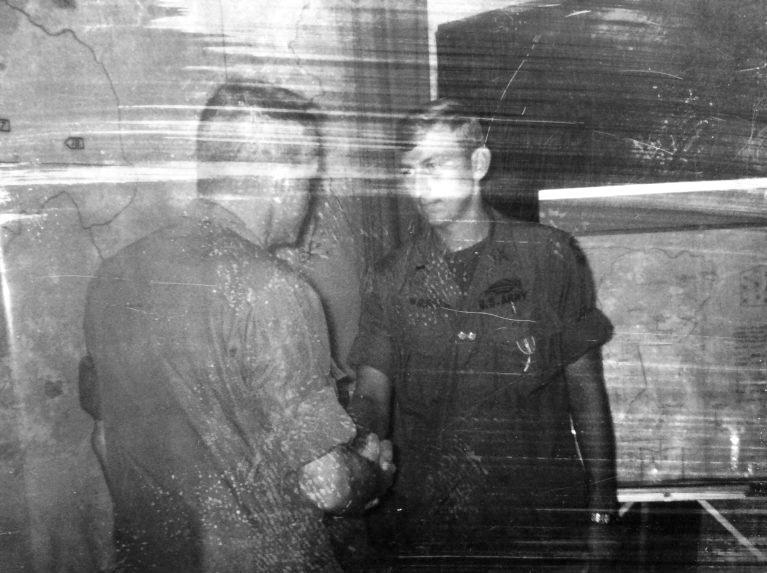
Walker’s own record reflects how dangerous that work became. Earlier records already showed him serving as an assistant battalion advisor with the 1st Battalion, 52d Regiment, 18th ARVN Division, as well as the 4th Battalion, 52d Regiment, 18th ARVN Division, and family-held award certificates indicate that his service brought repeated recognition for heroism and merit. The records show a striking list of decorations. Those records indicate Walker received the Bronze Star Medal with “V” Device, the Bronze Star Medal (First Oak Leaf Cluster) with “V” Device, the Army Commendation Medal, the Army Commendation Medal with First Oak Leaf Cluster and “V” Device, the Combat Infantryman Badge, the Purple Heart, the Vietnam Service Medal, the National Defense Service Medal, and the Republic of Vietnam Gallantry Cross with Silver Star. In a performance evaluation dated Aug. 8, 1969, states, “This officer has impressed me with his overall knowledge of Infantry tactics. While on combat operations he is constantly aler.t and abreast of the situation. I have witnessed many heroic acts by LT Walker while in contact with the enemy. He has demonstrated the ability to make sound decisions, quickly in the heat of battle. The safety and security of subordinates receive his primary concern. LT Walker has the potential to become a leader of high caliber and great military service.” The picture that emerges is of a young infantry officer whose advisory assignment repeatedly placed him in direct combat rather than at arm’s length from it.
The final weeks of Walker’s life are documented in some of the most painful records in the collection. A Western Union telegram sent to his parents reported that he had been wounded in action on Nov. 9, 1969, by fragments while on a military mission in Vietnam and placed on the very seriously ill list. A month later, Secretary of the Army Stanley R. Resor wrote to Walker’s parents that their son had died in Japan on Nov. 20, 1969, as the result of wounds received in Vietnam.
The letters that followed filled in the human side of the loss. Chaplain Willis F. Young, writing from the U.S. Army Advisory Group in III Corps, told Walker’s parents that their son was well liked by both the men of Advisory Team 87 and the South Vietnamese soldiers he worked with, and that a memorial service had been held in his honor on Nov. 24, 1969. Other Army letters informed the family that Gold Star Lapel Buttons were being sent in recognition of his death in service. Later correspondence dealt with the shipment of his civilian clothing, personal effects and rings from Vietnam and Japan back to his family. Posthumously, Walker was awarded the Bronze Star Medal (Second Oak Leaf Cluster) for meritorious service from Jan. 1969 – Nov. 9, 1969, his third Bronze Star Medal, and his second Purple Heart for the wounds he sustained which led to his death.
Taken together, the surviving papers tell the story of a young officer whose Army career followed the full arc of the Vietnam advisory system: Fort Benning, Fort Campbell, Fort Bragg, Fort Bliss, then the hard battalion-level fight in III Corps. On paper, Walker’s career was brief. In substance, it was dense with training, responsibility, combat service and sacrifice. At the time of his death, 1Lt. Walker was the most decorated East Tennessee Soldier from the Vietnam War. His sacrifice will never be forgotten.
1LT Jackie Carroll Walker Awards List
1. National Defense Service Medal – Unknown Date
2. Good Conduct Medal – 16 November 1967
3. Vietnam Service Medal – Unknown Date
4. Army Commendation Medal – Unknown Date
5. Combat Infantryman’s Badge – 27 March 1969
6. Bronze Star Medal with “V” Device – 31 March 1969
7. Purple Heart – 14 May 1969
8. Vietnam Gallantry Cross with Silver Star – 1 August 1969
9. Bronze Star Medal 1st Oak Leaf Cluster with “V” Device – 12 August 1969
10. Republic of Vietnam Combat Medal – Unknown Date
11. Army Commendation Medal 1st Oak Leaf Cluster with “V” Device – 27 August 1969
12. Bronze Star Medal 2nd Oak Leaf Cluster – Posthumously
13. Purple Heart – Posthumously
Jackie Carroll Walker died of wounds. He was the son of Jack Walker and Lavern Harmon.
He entered via Reserve Military and served during the Vietnam War. Start of tour or enlistment date was January 13, 1969. Walker had the rank of First Lieutenant. Occupation or specialty was Infantry Unit Commander. Service number was 415780626. Served with Macv, Adv Tm 87.
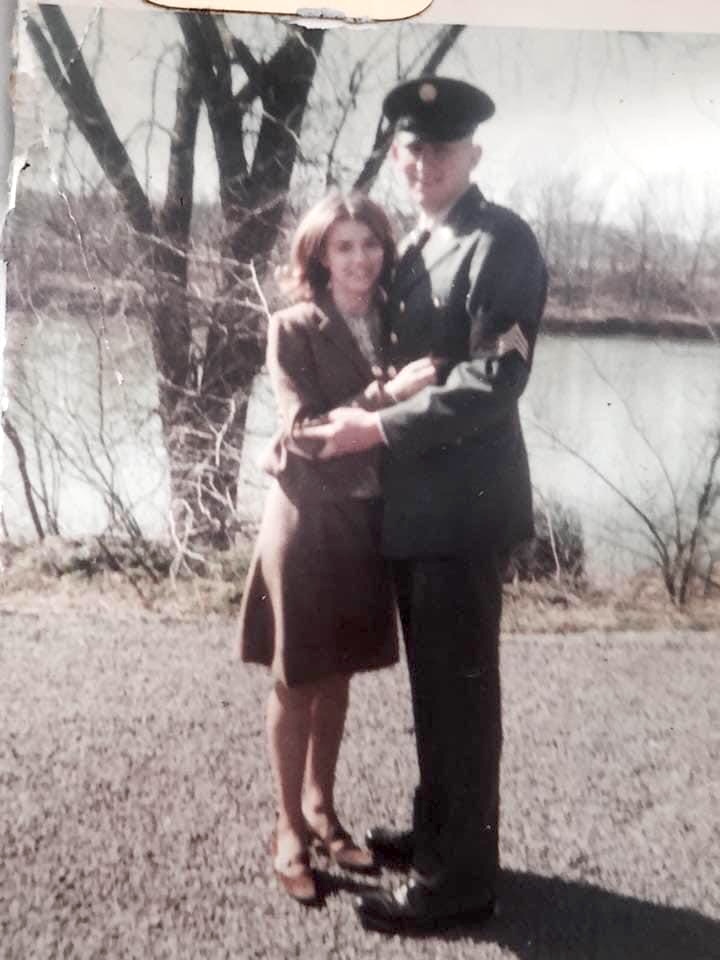
Jackie Carroll Walker was my brother-in-law. My sister, Nancy Sheets, was his wife at the time of his death. We are currently working on the dedication of a memorial bridge.
I would be honored to sponsor his memorial.
-Submitted by Kathy Donaldson Sullivan
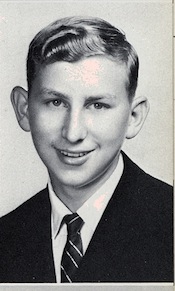
Picture from the Holston High School in Knoxville, yearbook 1965
- Rank: First Lieutenant
- Date of birth: 9 September 1947
- Date of death: 20 November 1969
- County: Knox
- Hometown: Corryton
- Service Branch: Army
- Division/Assignment: Advisory Team 87
- Conflict: Vietnam
- Awards: 3 Bronze Star Medals, 1 with “V” device; Purple Heart; 2 Army Commendation Medals, 1 with “V” device; Army Good Conduct Medal; National Defense Service Medal; Vietnam Service Medal; Republic of Vietnam Gallantry Cross Medal with Silver Star; Republic of Vietnam Campaign Medal; and Combat Infantryman’s Badge
- Burial/Memorial Location: Oak Ridge Memorial Park, Oak Ridge, Anderson County, TN
- Location In Memorial: Pillar XXIII, Middle Panel
- Sponsored by: Kathy Donaldson Sullivan
Image Gallery
Click a thumbnail below to view at full size.